By Tim Kolling, Co-Founder & Chief Media Buyer
Most advertising asks, “Who is our audience?” Geofencing asks a more useful question: “Where is our audience?”
If your best customers spend time at a certain place, like a home show, a college campus, a hospital or even a competitor’s parking lot, geofencing lets you reach the phones that were there. For Topeka businesses, that means ad dollars go to people who have already shown up somewhere that matters, not to everyone in Shawnee County.
What is geofencing advertising?
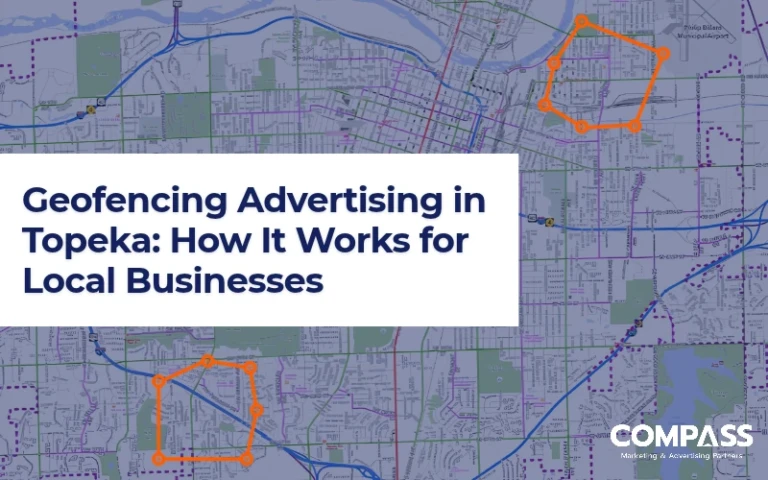
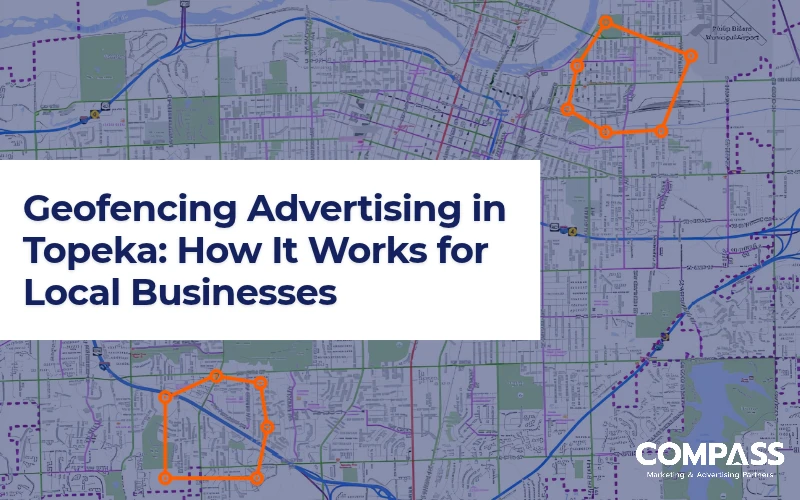
Geofencing draws a virtual boundary around a real location. When a mobile device enters that boundary, it can be added to an audience. That device can then be shown your ads in apps and on websites, during the visit or in the days and weeks after.
The ads go to devices, not to named people. You never receive anyone’s personal information. You simply reach people based on where they have been.
Radius vs. polygon targeting
There are two main ways to draw a geofence:
- Radius targeting draws a circle around a point on the map. It’s simple, but a circle around a building also catches the street, the parking lot next door and the business across the road.
- Polygon targeting traces the exact shape of the place you care about, like the outline of an event center, one store or one section of a campus. Less of your budget goes to people who were just passing by.
For most local campaigns, polygon targeting is the more precise choice.
How Topeka businesses use geofencing
A few common ways to put it to work:
- Events. Reach people who attended a home show, trade show or festival at a venue like the Stormont Vail Events Center, while the event is fresh in their minds.
- Competitor locations. Show your offer to people who visited a competing business.
- Your own location. Follow up with people who visited you but didn’t buy yet.
- Campuses and workplaces. Reach students, staff or employees at a specific campus, hospital or large employer.
- Recruiting. Put job openings in front of people who work at places with the skills you’re hiring for.
Geofencing works best alongside the rest of your marketing. A billboard, a radio spot or a social campaign builds awareness, and a geofence follows up with the people most likely to act.
Measuring results
This is where geofencing beats many traditional channels. A campaign can show how many people saw your ads, how many clicked, and in many cases how many later visited your location or website.
That tracking is what makes a campaign better over time. When one fence or one ad is performing, budget can shift toward it. When something isn’t working, it can be adjusted or turned off, without waiting until the campaign ends.
How to get started
- Pick the places. List the locations where your best customers spend time.
- Define the goal. Store visits, phone calls, form fills or event sign-ups.
- Plan the creative. The ad has to make sense to someone who was just at that place.
- Set the timing. Decide how long after a visit someone should keep seeing your ads.
- Track and adjust. Review results often and move budget toward what’s working.
Geofencing FAQs
Is geofencing advertising legal and private?
Yes. Campaigns use location data from apps and devices, and ads are served to devices, not to named individuals. Advertisers never receive personal information.
How small can a geofence be?
Small enough to outline a single building or parking lot, which is why polygon targeting is useful for local businesses.
Is geofencing only for big budgets?
No. Because it’s so targeted, geofencing can work for small and mid-size businesses that can’t afford to advertise to an entire market.
Can geofencing work with TV, radio and billboards?
Yes. Many campaigns use traditional media to build awareness and geofencing to reach the people most likely to act.
Let’s map out your audience. Compass plans and manages geofencing and polygon targeting campaigns for businesses in Topeka and across Kansas, alongside TV, radio, billboards and digital. Our media buying team, led by co-founder Tim Kolling, tracks every campaign and shifts your budget toward what’s working.
Explore Advertising & Media Buying or talk to our team.